Scientists in S Korea have cloned 30 human embryos. They hope to obtain cells that could eventually be used to treat disease.
The took the genetic material from normal cells in women donors and combined it with their eggs.
This was done at the Seoul National University by Suk Hwanf and his team.
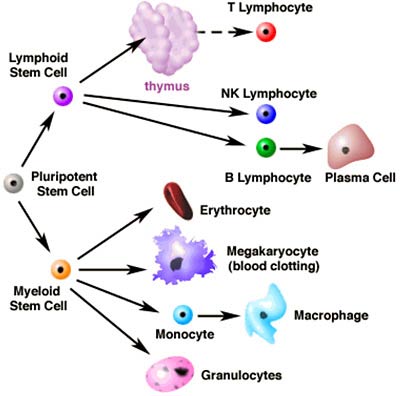
The embryos were then developed to produce stem cells. These stem cells can divide into any tissue in the body.
These cells will (it is hoped) replace those which have failed, for example, in patients with Alzheimer's disease.
'Because these cells carry the nuclear genome of the individual, after differentiation they could be expected to be transplanted without immune rejection for treatment of degenerative disorders. Our approach opens the door for the use of these specially developed cells in transplantation medicine.' said Professor Hwang.
His research is being published online by the journal Science (Science Express web site).
Mice proof
There have been claims in the past for the creation of human embryo clones to study so-called stem cells - many of them disputed.
But no group has reported producing so many early-stage clones and seen their development progress to such an advanced stage.
The work has also been subjected to the rigorous scrutiny of independent scientists before publication in a major journal.
'These are the most advanced human embryo clones yet produced,' Professor Hwang told BBC News Online.
The team says it sought approval for its work from an ethical review board and obtained informed consent from its women donors before proceeding with the work.
Thirty embryos
The team tells Science Express how it used 242 eggs in its experiments taken from 16 women.
In each case, material was transferred from the nucleus of a non-reproductive (somatic) cell, containing the woman's genetic blueprint, into a nucleus-free egg from the same donor.
Following this transfer, factors within the host egg's exterior, or cytoplasm, are believed to have reprogrammed the new nuclear contents by activating versatile embryonic genes, while silencing the more limited adult somatic cell genes.
In total, 30 embryos - exact genetic copies of their female donors - were then cultured to the so-called blastocyst stage at which stem cells could be extracted.
These special cells were seen to divide into all three of the main tissue types found in the human body, the researchers report.
The cells were even transplanted into mice to show they could differentiate into still more specific cell types, offering further proof of their 'pluripotency'.
The stated intention is to study human embryonic stem cells to see how they could be used as a therapeutic tool to treat disorders, such as diabetes, osteoarthritis, and Parkinson's disease, among others, in which tissues in the body have begun to fail.
Non-egg future
Editor-in-chief of the journal Science, Donald Kennedy, said: 'The potential for embryonic stem cells is enormous, but researchers still must overcome significant scientific hurdles.'
And he added: 'These results seem promising. But, it's important to remember that cell and tissue transplantation and gene therapy are still emerging technologies, and it may be years yet before embryonic stem cells can be used in transplantation medicine.'
Addressing ethical concerns, he also called for a worldwide ban on activities which would seek to use this technology to create living children.
Professor Hwang, whose expertise has been developed in animal cloning, said any attempt to produce a baby would be 'crazy'.
'We will never try to produce cloned human beings,' he said.
'During animal cloning, we experienced so many difficulties and dangers with deformities, especially in the internal organs.'
Commenting on the Korean work, Roger Pedersen, professor of regenerative medicine, at the University of Cambridge, UK, told BBC News Online: 'The present work has substantially advanced the cause of generating transplantable tissues that exactly match the patient's own immune system.
'These researchers' findings also make it possible to learn how to reprogramme the human genome to an embryonic state.
'This will likely accelerate the development of alternative ways of reprogramming human cells, which could in the future diminish the need to use human eggs for this purpose.'

Studies in zebrafish lead to better understanding of blood formation and leukemia development
Boston--Researchers at Children's Hospital Boston have isolated a gene responsible for making blood stem cells. The findings appear in today's issue of the journal Nature. The gene, called cdx4, is responsible for establishing the location of blood cell formation in the developing embryo.
Cdx4 works by altering the expression of HOX genes, which are involved in making the body plan. Surprisingly, the authors found that overexpression of cdx4 in zebrafish embryos, or in mouse embryonic stem cells, induces the new production of early blood cells.
'We have been searching for genes in the zebrafish that participate in making blood stem cells,' according to lead author, Leonard Zon, MD., of Children's Hospital Boston.
'Now that we have these genes, we are one step closer to growing more blood stem cells. This will be potentially useful for patients with severe congenital anemias or bone marrow transplantation for cancer,' adds Zon.
Scientists studied a mutant that had a severe anemia because it had few blood stem cells, and also had a tail defect. The zebrafish mutants generally die within seven to ten days after fertilization.
They discovered the mutation in the cdx4 gene, which is associated with the early blood deficiency as well as abnormal developmental patterning, including aberrant hox gene expression.
When researchers injected the mutants with hox genes, such as hoxb7a and hoxa9a, it resulted in almost complete rescue of the deficient blood cells. Another hox gene, hoxb6b showed some improvement, but hoxb8a did not have any effect on the blood defect.
Researchers believe this shows blood cell development is dependent on the proper expression of these hox genes, and that overexpression of these genes can reverse a fatal deficiency in these blood cells.
'These zebrafish findings will allow us to better understand normal blood development, with the hopes of eventually developing more effective treatments for these devastating blood disorders such as leukemia,' says Zon.
Children's Hospital Boston is home to the world's largest research enterprise based at a pediatric medical center, where its discoveries have benefited both children and adults for over 100 years. More than 500 scientists, including seven members of the National Academy of Sciences, nine members of the Institute of Medicine and nine members of the Howard Hughes Medical Institute comprise Children's research community. Founded in 1869 as a 20-bed hospital for children, Children's Hospital Boston today is a 300-bed comprehensive center for pediatric and adolescent health care grounded in the values of excellence in patient care and sensitivity to the complex needs and diversity of children and families. It is also the primary pediatric teaching affiliate of Harvard Medical School. For more information about the hospital visit: www.childrenshospital.org.